
We draft with the courtroom in mind
We argue contract disputes before the commercial courts and arbitral tribunals, so we know which wording holds and which collapses at the first disagreement.
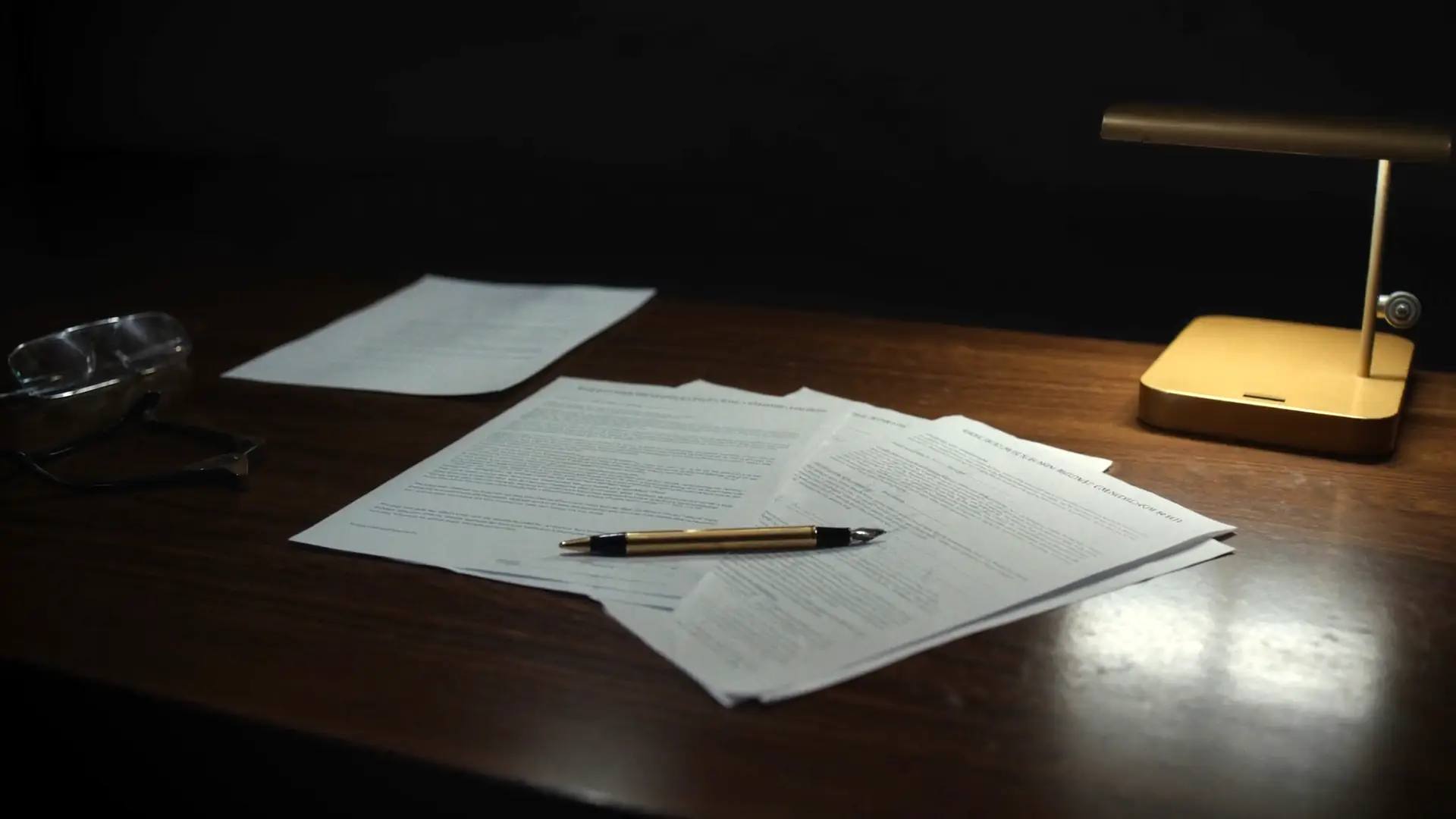
Contracts and the Civil Transactions Law
The request type is set to contracts. In the details, give the type of contract and whether it is before or after signature.
A contract lawyer who drafts and reviews commercial contracts for companies and individuals, from supply and construction agreements to memoranda of understanding and franchises, negotiates the terms before signature and pursues breaches afterwards. We serve clients from Jeddah and throughout the Kingdom online. Send the draft or the signed contract, and we will point out the risks and the scope of work.
We argue contract disputes before the commercial courts and arbitral tribunals, so we know which wording holds and which collapses at the first disagreement.
We do not return a contract covered in edits without explanation; we give the reason for each comment and suggest alternative wording you can put to the other side directly.
Drafting or review fees depend on the contract's length and complexity, and we send them to you in writing for approval before any work begins.
Contracts between businesses carry risks that simple contracts do not: recurring supply with changing quantities and prices, distribution or agency in a set territory, services with performance levels, and operating partnerships. We draft or review these contracts so they cover what matters to your business: the scope and timing of obligations, payment and late payment, limits of liability and compensation, confidentiality, termination and its effects, and how disputes are resolved, in court or by arbitration.
We work on the draft whether it comes from you or the other side, in Arabic or bilingual, and point out the clauses that need negotiating before signature, with proposed alternatives. If you have recurring contracts with suppliers or customers, we prepare a standard template your business can adopt instead of reviewing each contract from scratch.
The Civil Transactions Law is now the general reference for contracts in Saudi Arabia. Among its rules: a contract binds its parties and may only be changed by their agreement or on a ground the law recognises, and clear wording is not departed from, while unclear wording is read in light of the parties' common intention. Clear contract drafting therefore narrows the room for interpretation that disputes grow from.
Every contract we write starts from five points: precise obligations, meaning who delivers what, when and to which specification; the price, how it is paid and the consequence of late payment; termination events and prior notice; liability limits and agreed damages; and finally the governing law and how disputes are resolved, whether before the commercial courts or by arbitration under the Arbitration Law.
Some clauses do not work the way their author expects: the court may reduce agreed damages that are excessive, and an agreement excluding liability does not cover fraud or gross fault. Good drafting accounts for this from the outset.
Most contracts that reach us after a dispute carried the problem in their text from the day they were signed; nobody read them with a legal eye. Reviewing a contract before signing does not mean rewriting it entirely. It means identifying the clauses that shift risk onto you for nothing, and proposing wording the other side will usually accept.
If the contract is in front of you now, pause at any of these signs and send it to us before you sign:
Construction contracts generate more disputes than most, because the project changes during execution while the text stays fixed. We start by defining the scope through the attached drawings, bills of quantities and specifications, then regulate variations: who can order them, how they are priced and how they affect the schedule, so that each addition does not become a fight over payment.
On time, we set the programme, delay penalties and their cap, and the events that justify an extension, such as the owner's late handover of site or late payment. We also deal with retention from interim payments and when it is released, bank bonds, and the procedure for provisional and final acceptance and the snag list.
The Civil Transactions Law places a specific liability on the contractor and engineer for the soundness of buildings and fixed structures for a period after handover, and it cannot be contracted out of. Whether you are the owner, main contractor or subcontractor, we draft to protect your position in that chain.
Many people assume a memorandum of understanding is a mere statement of intent with no legal effect. That is not always so. What counts is the content, not the title: if the document contains the essential terms of the deal, such as the subject and price, and shows an intention to be bound, it may be treated as a binding contract even if it is called an MoU.
We therefore draft the memorandum around what you need from it: stating that its commercial terms are non-binding and that the final deal is subject to a later contract, while making specific clauses expressly binding, such as confidentiality, exclusivity during negotiations, each side bearing its own costs, and governing law.
Use an MoU when you need a framework to negotiate or to vet the other side before investing, not as a substitute for a contract. If actual performance starts on the basis of it, it is safer to convert it into a full contract before the commitments grow. We also review any non-disclosure agreement signed alongside the MoU so the two do not conflict.
In a supply agreement, disputes usually turn on specifications, quantities, delivery dates, transfer of risk and inspection on receipt. We set the conformity standard and the deadline for notifying defects, link the price to a clear mechanism for recurring supply, and regulate what happens if supply is interrupted for reasons beyond either party's control. We also add a clause limiting liability for indirect loss in proportion to the contract value.
A franchise agreement is governed by the Commercial Franchise Law and its regulations, which require the franchisor to give the franchisee a disclosure document before contracting, containing material information about the business system and financial obligations, as well as recording the agreement with the Ministry of Commerce. For either side we review royalties, territory, training and support, renewal and termination terms, and post-term restrictions on competition. If you are the franchisee, ask for the disclosure document and study it before paying any fee or signing any commitment.
Send your case details through the assessment form. A specialist lawyer contacts you during business hours with the next step, scope and written fees before any engagement.
Yes. We draft and review supply, distribution, agency, services and operating-partnership contracts between businesses, in Arabic or bilingual, and prepare standard templates for businesses with recurring supplier or customer contracts.
It depends on the type and length of the contract, the number of annexes and whether negotiation with the other side is needed. A short services agreement differs from a construction contract with bills of quantities. We send a written quote after seeing the draft and before any commitment; it may be a fixed amount per contract or a periodic arrangement for clients with recurring contracts.
It depends on the size of the contract, its attachments and how urgent the deal is. We agree a delivery date with you when setting the scope; if signing is close, tell us the date when you send it so we can prioritise. Sending the contract with all its attachments from the start cuts down back-and-forth and speeds up our reply.
Yes. In bilingual contracts we check that the two texts match and which clause decides the prevailing language in case of conflict, because differences between versions are a recurring cause of disputes. We also propose matching Arabic wording where the contract may come before a Saudi court.
It can be. It depends on its content and the parties' intention, not its name. If it contains the essential terms and an intention to be bound, it may be treated as a contract, so the binding and non-binding clauses should be stated expressly. Do not sign one with exclusivity or confidentiality terms before checking their duration and the penalty for breach.
Start with the notice and termination clauses, then document the breach and send written notice as the contract requires. The options are then weighed between demanding performance or terminating with damages, before the commercial court or arbitration depending on the dispute clause. Do not suspend your own performance before taking advice, as that may be treated as a breach on your side.
Drafting builds the contract from scratch around your deal and interests; review works on a text the other side wrote, identifying its risks and proposing changes. Drafting gives you more control over the terms, so it helps to be the one who tables the first draft when possible.
Most commercial contracts are valid once both parties sign, without notarisation. Some, however, must be recorded with a particular authority, such as a franchise agreement with the Ministry of Commerce, and some benefit from notarisation to be relied on or enforced more easily.
Yes, and most contract work is fully online: you send the draft, we return it with comments, and negotiation meetings take place by video call. Our team works with clients in cities across the Kingdom without any need to visit the office. If a disagreement turns into a lawsuit, we attend hearings in the city hearing it whenever required.
Reviewing a contract before signing protects you from obligations you missed. Here are 10 clauses to understand first…
A two-party partnership agreement protects your capital and effort when written clearly. Learn the key clauses and…
